Bioimpacts. 16:30245.
doi: 10.34172/bi.30245
Original Article
Dutasteride-loaded nanostructured lipid carrier for androgenic alopecia treatment – An in vivo study
Saman Heydari Conceptualization, Data curation, Investigation, Methodology, Writing – original draft, Writing – review & editing, 1, 2 
Mohammad Barzegar Jalali Conceptualization, Investigation, Methodology, Writing – original draft, Writing – review & editing, 3
Maryam Kouhsoltani Data curation, Investigation, Writing – review & editing, 4
Afsaneh Radmehr Data curation, Investigation, Methodology, Writing – original draft, Writing – review & editing, 5
Ana Cláudia Paiva-Santos Data curation, Investigation, Writing – review & editing, 6, 7
Siamak Barghi Data curation, Investigation, Writing – original draft, Writing – review & editing, 8
Hamed Hamishehkar Conceptualization, Data curation, Investigation, Methodology, Writing – original draft, Writing – review & editing, 9, 10, *
Author information:
1Department of Pharmaceutics, School of Pharmacy, Ardabil University of Medical Sciences, Ardabil, Iran
2Student Research Committee and Department of Pharmaceutics, Faculty of Pharmacy, Tabriz University of Medical Sciences, Tabriz, Iran
3Biotechnology Research Center and Department of Pharmaceutics, Faculty of Pharmacy, Tabriz University of Medical Sciences, Tabriz, Iran
4Department of Oral and Maxillofacial Pathology, School of Dentistry, Tabriz University of Medical Sciences, Tabriz, Iran
5Department of Dermatology, Faculty of Medicine, Tabriz University of Medical Sciences, Tabriz, Iran
6Department of Pharmaceutical Technology, Faculty of Pharmacy of the University of Coimbra, University of Coimbra, Coimbra, Portugal
7REQUIMTE/LAQV, Group of Pharmaceutical Technology, Faculty of Pharmacy of the University of Coimbra, University of Coimbra, Coimbra, Portugal
8Department of Medical Laboratory Sciences, Faculty of Paramedical Sciences, Shahid Beheshti University of Medical Sciences, Tehran, Iran
9Drug Applied Research Center, Tabriz University of Medical Sciences, Tabriz, Iran
10Research Center of New Material and Green Chemistry, Khazar University, 41 Mehesti Street AZ1096, Baku, Azerbaijan
Abstract
Introduction:
Androgenic alopecia (AGA) is the most common type of hair loss that occurs due to androgens, specially, dihydrotestosterone (DHT), and the 5-alpha reductase is the key enzyme to control AGA, as it is responsible for the conversion of testosterone to DHT, the more potent form of testosterone involved in the pathogenesis of AGA. Blockers of this enzyme suppress the conversion of androgens to DHT. Dutasteride is one of the 5-alpha reductase inhibitors and is frequently used as an anti-hair loss treatment. Gamma-oryzanol (GO) is an anti-oxidant and anti-5-alpha reductase, which has been introduced as an anti-hair loss treatment by some studies.
Methods:
The nanostructured lipid carriers (NLCs) were developed for targeting the dutasteride and GO in hair follicles. The NLCs were prepared from herbal oils pumpkin seed oil (PSO) and saw palmetto (SP), which also have a 5-alpha reductase inhibitory effect, contributing to the therapeutic effect. NLCs in follicular targeting enable to accumulation of the drugs in the target area (hair follicle cells), reduce the absorption of dutasteride in other organs and tissues, and reduce the side effects. NLCs were prepared by adopting a hot homogenization method and were characterized by particle size analyzer, scanning electron microscope, and X-ray diffraction. An in-vivo study was conducted using C57BL/6 mice to assess NLCs ability in drug delivery and accumulation in hair follicles.
Results:
NLCs had great potentials for reducing the dutasteride daily dose. Moreover, the accumulation of NLCs was confirmed by histopathological images even after two weeks of the discontinued treatment.
Conclusion:
NLCs may have facilitated the follicular delivery of the anti-hair loss drugs. Since the NLCs have potential for accumulation in the hair follicles, the interval of formulation usage may have been increased to more than once a week which was of great interest to the practitioners aiming at developing more efficient formulations for androgenetic alopecia.
Graphical Abstract
Keywords: Dutasteride, Gamma-oryzanol, Nanostructured lipid carriers, Follicular drug delivery, Androgenic alopecia
Copyright and License Information
© 2026 The Author(s).
This work is published by BioImpacts as an open access article distributed under the terms of the Creative Commons Attribution Non-Commercial License (
http://creativecommons.org/licenses/by-nc/4.0/). Non-commercial uses of the work are permitted, provided the original work is properly cited.
Funding Statement
This work was financially supported by Tabriz University of Medical Sciences, Tabriz, Iran (grant No. 61589).
Introduction
Alopecia or baldness is a condition that causes partial or complete hair loss and slow growth of hair. It is a very common condition in both males and females, elderly and even young adults. Alopecia is initially perceived as a cosmetic issue; when it occurs repeatedly, however, it leads to mental and psychological problems such as lack of self-esteem, depression, anxiety disorders, and even more dangerous side effects (e.g., suicidal behaviors).1-4 The most common type of alopecia in both males and females is patterned hair loss or androgenic alopecia (AGA), which is a kind of hair loss caused by androgenic hormones. The miniaturization of terminal hairs and turning to vellus hairs is the main symptom of AGA, which finally diminishes the hair follicles and causes the total baldness.5,6 The main mechanism of male pattern androgenic alopecia is associated with androgens, testosterone, and dihydrotestosterone (DHT), as well as with the enzyme that converts testosterone to DHT, the 5-alpha reductase is key to controlling this condition.7 Locally elevated levels of DHT in hair follicles cause hair loss in AGA. The 5-alpha-reductase converts testosterone to DHT (i.e., the more potent androgen).8-10 The enzyme 5-alpha reductase (also known as 3-oxo-5α-steroid 4-dehydrogenases or SRD5A) is responsible for converting testosterone to dihydrotestosterone in different organs such as brain, skin, liver, testis, prostate gland and hair follicles. It has three subtypes namely SRD5A1, SRD5A2, and SRD5A3. The isozymes SRD5A1 and SRD5A2, are the enzymes found in hair follicles and are responsible for AGA.11-13 when the activity of this enzyme is reduced, the rate of hair loss is also decreased. There is only one FDA-approved medication with a 5-alpha reductase inhibitory effect for AGA treatment, which is oral finasteride. As it is absorbed into the systemic circulation, however, it demonstrates limited efficacy, and even may reduce the activity of 5-alpha reductase in other tissues and organs, thereby causing unwanted side effects like sexual disorders (e.g., erectile dysfunction and reduced libido) and post-finasteride depression.14-17 Several studies have shown that topical finasteride is effective in treating this issue and reducing its side effects.15,18 Therefore, the topically applied formulations are preferred to oral tablets. Dutasteride is another 5-alpha reductase inhibitor that is more potent than finasteride since it inhibits SRD5A1 and SRD5A2, three times and 100 times stronger than finasteride does respectively, some studies have investigated the anti-AGA effects of both oral and topical formulations of it.12,19-23 therefore, several herbal and natural products with different mechanisms like vascular endothelial growth factor (VEGF), insulin-like growth factor-I (IGF-I), 5-alpha reductase inhibitory, anti-oxidant, and anti-inflammatory effects, etc.24,25 have been examined in order for developing an effective AGA treatment. Products containing rosemary oil, olive oil, pumpkin seed oil (PSO), saw palmetto extract (SP), and many other herbal oils and extracts have been introduced to stimulate hair growth and reduce hair loss.25-33 Expression of nitric oxide synthase in response to androgens generates the oxidative stress and inflammatory responses, and the oxidative damage leads to hair loss by activating different mechanisms; anti-oxidants and free radical scavengers can reduce the free radicals produced by the oxidative stress and therefore, can be considered as a treatment option in AGA.34-36 Gamma-Oryzanol (GO) is one of these anti-oxidant agents from rice bran, and has been reported by several studies to act as a highly potent anti-oxidant and free radical scavenger.37-39 as the result, these products, are recognized by the pharmaceutical industries due to their natural origins.40,41 Follicular drug delivery is a relatively new field of targeted drug delivery that aims to deliver the drug compounds to hair follicles and treat the hair follicle disorders, hair loss in particular.42,43 In Follicular delivery, the drug compound reaches deeper into the hair follicle, and thereby increasing the effectiveness of the drug, and reducing the unwanted side effects (caused by the distribution of the drug to all body tissues). In some cases of drug delivery systems (e.g., SLNs, NLCs, etc), the residence time of therapeutic agent in hair follicles increases and, therefore, the intervals of drug usage reduce, which facilitates the patient compliance.42 A nanostructured lipid carrier (NLC) is a lipid-based nano-carrier for drug delivery, and is one of the most recognized nano-lipidic carriers in dermatology products44-47 NLCs increase the follicular delivery of loaded drug compounds instead of the conventional topical dosage forms (e.g., gel, cream, solutions, etc), and even help the loaded drug to depot in hair follicles which prolongs the residence time of therapeutical agent and reduces the usage intervals.45,48,49
In this study, NLCs made of natural lipids were used as the drug delivery system to load dutasteride (i.e., a 5-alpha reductase inhibitor) and gamma-oryzanol for follicular targeted drug delivery. The natural lipids used as NLC structure were pumpkin seed oil (PSO)27,50,51 and saw palmetto extract (SP),52-55 Both of them have approved 5-alpha reductase inhibitory effects and GO is an anti-oxidant and also 5-alpha reductase regulatory effects lead to hair growth stimulating effects.34,56,57 therefore the entire system of drug delivery has anti-hair loss effects, even the NLC structure. This study aimed to investigate the co-delivery of dutasteride and GO to hair follicles of mice by NLCs from natural lipids in order for improving the anti-hair loss effects of dutasteride and decrease the dose of it via accumulation of nanoparticles in hair follicles.
Materials and Methods
SP and PSO were supplied from Jiaherb, China, Precirol, glycerol, poloxamer188 were purchased from, Sigma–Aldrich Chemical Company, USA, and GO was a generously gifted from Tsuno Rice Fine Chemicals Co., Ltd, Japan and dutasteride were supplied from Dr. Reddy’s, India. Minoxidil was obtained from Pakdarou, Iran, and testosterone was purchased from Iran Hormone, Iran.
Preparation of dutasteride and gamma-oryzanol loaded-NLCs (NLC-Dut-GO)
Nanostructured lipid carriers were prepared adopting the hot homogenization method. To this end; 400 mg of liquid oil (200 mg SP and 200 mg PSO), 550 mg solid lipid (Precirol), 2.5 mg dutasteride and 100 mg GO were melted in a 70°C hot water bath above the melting point of Precirol, then the melted solution was homogenized (21000 rpm) using a high-shear homogenizer (Silent Crusher M, Heidolph, Germany) while an aqueous solution of surfactants (500 µl glycerol and 500 mg poloxamer 188 in 25 ml distilled water) was added dropwise to the lipid phase. To prepare the blank NLCs, the previous process was completed without adding dutasteride and GO. After the formation of the primary emulsion, the formulations were sonicated by a probe sonicator (Sonics, Vibracell, Newtown CT) for particle size reduction, and, then, the formulations were kept in the refrigerator until cooling and forming the final NLCs.
Preparation of the physical mixture
To this end, 2.5 mg dutasteride, 100 mg GO, 200 mg SP, 200 mg PSO, 550 mg Precirol, 500 µl glycerin, and 500 mg poloxamer188 were heated to 70°C and mixed with a glass stirring rod, and then, were dispersed in 25mlit distilled water to make a physical mixture of all ingredients of NLC-Dut-GO.
Particle size distribution and zeta potential
Particle size distributions of the prepared NLCs were characterized by a laser diffraction particle size analyzer (Wing SALD 2101, Shimadzu, Japan). The average particle size was reported as the mean volume diameter and the measurements were performed in triplicate. The morphology and particle size of the prepared NLCs were determined using a Scanning Electron Microscope (SEM) (MIRA3, TESCAN, Czech Republic). The zeta potential of prepared NLCs were acquired using zeta-sizer (MALVERN- Nano zs, UK).
X-ray diffraction (XRD)
To confirm the proper preparation of nanoparticles and none-crystallization of the ingredients (carrier’s composition and loaded drugs), during preparation of NLCs, XRD analysis was performed and the crystallinity of NLC-Dut-GO and the physical mixture was compared with those of Precirol, GO, PSO, SP, and dutasteride, using X-ray diffractometer (Tongda, TD-3700, China, 10 ºθ-60 ºθ).
Fourier transform infrared- FTIR-analysis
The FTIR spectra of dutasteride powder (Dut), gamma-oryzanol powder (GO), freshly prepared NLC-Dut-GO, and blank NLCs were recorded by Spectrum Two, LITA, UK. The FTIR spectra were measured at 400-4000 cm-1 with samples dispersed in KBr pellets.
Entrapment efficiency (EE) and loading capacity (LC)
EE is a term that signifies the percentage of the loaded drug to added drug and loading capacity is the percentage of loaded drug to the amount of added lipid (both solid and liquid lipid). To separate the loaded and un-loaded dutasteride, the prepared NLCs were centrifuged (12000 rpm, with Amicon®) for 20 minutes, so that the unloaded drug precipitated at the bottom of Falcon, and the loaded drug was achieved in an encapsulated form in the aqueous phase (i.e., the supernatant solution). After separation of the supernatant, chloroform was added to it and was placed in a shaker incubator to release all of the loaded drugs into the chloroform then the chloroform phase containing dutasteride was picked out after two-phase separation (i.e., aqueous phase and chloroform phase) the precipitated powder after the chloroform evaporation was diluted with an acetonitrile-water solution and the amount of loaded dutasteride was determined by high-performance liquid chromatography (HPLC) (Knauer, Germany). Briefly, a C-18 HPLC column was used as the stationary phase, acetonitrile: water: trifluoroacetic acid (52:48:0.05) as the mobile phase, and acetonitrile: water (60-40) as a diluent for diluting the samples. GO is a very low-density powder therefore, the unloaded drug remained at the top of the solution after the centrifugation, and the loaded GO remains in encapsulated form in the solution. We extracted the loaded GO was extracted by chloroform, and the amount of loaded GO was determined using spectrophotometer (UV-2000, Shimadzu, Japan).
In-vitro release study
The release study was conducted in an oily environment to partially mimic the skin layers’ physicochemical aspects. To this end, isopropyl myristate- isopropyl alcohol 4:1 was used as the release environment, and 1ml of NLC-Dut-GO was added to 1000 ml of the release environment in a sink condition and they were kept in a shaker incubator with 37ºC and 180 rpm. The samples were taken after 30 minutes, 1, 3, 6, 12, 18, and 24 hours, each sample size was 1ml and the removed volume was replaced with 1 ml of fresh solvent system (isopropyl myristate- isopropyl alcohol 4:1) after each sampling.
Stability study
Three samples of NLC-Dut-GO, were prepared and kept at ambient temperature, then the samples were analyzed after 3, 6 and 12 months, and their particle size distribution and EE% were calculated. All measurements were performed in triplicate. Also, the XRD analysis was done to see if there are any lipid phase crystallizations after 12 months or not. The change of particle size of NLC-Dut-GO after 12-months storage was statistically analyzed using paired-t test by SPSS statistical Software.
In-vivo study
A total of 30 mice (C57BL/6) aged 6-8 weeks and weighting 20-25 g were selected and randomly assigned into six groups. All groups were kept individually in cages and fed normally. Dorsal skin hairs of all groups were shaved using an electric shaver and treated as below:
Group 1 was the control group which received no treatment. Group 2 was the negative control group which was only induced by AGA using 100 µl testosterone enanthate 0.05% w/v on a daily basis for 14 days. Group 3 was the positive control group which received daily treatments of 100 µl testosterone enanthate 0.05% w/v, as well as 100 µl minoxidil 5% w/v after 30 minutes (the only topical FDA-approved treatment of AGA). Groups 4 and 5 were treated with 100 µl of the prepared NLC-blank and PM respectively, 30 minutes after daily induction of AGA using 100 µl testosterone enanthate 0.05% w/v. finally, Group 6 was treated with NLC-Dut- GO every three days (for proof of accumulation of NLCs in hair follicles) and daily induction of AGA using 100 µl testosterone enanthate 0.05% w/v. At the end of AGA induction (i.e., day 14th), the studied groups were sacrificed and the skin of the treated areas of mice was separated for H&E staining to check the new follicles. However, two mice from groups 4 and were kept alive to 6 continue the study for another 14 days with AGA induction by testosterone (without applying the therapeutic agents) to examine the potential of NLCs for accumulation in the follicles. On day 28, the rest of the mice were also sacrificed and their skin samples were separated for pathological examination.
Results and Discussion
Particle size and zeta potential
The result from the particle size analyzer is shown in Fig. 1a and Fig. 2a, the volume mean diameter was 413 ± 47 nm, for NLC-Dut-GO and 392 ± 32 nm for blank NLCs. SEM results (Fig. 1b and Fig 2b) were about 400 nm and 310 nm for NLC-Dut-GO and blank NLCs, respectively. The SEM results confirmed the results of narrow particle size distribution; in a study by Lademann et.al, the particle size of around 300 nm, was found the appropriate size for follicular drug delivery42,58 which was consistent with the result from our previous unpublished study about investigating the best particle size range for hair follicular targeted drug delivery, and indicating that, the 300-400 nm particles (in comparison with 50 and 1000), had greater potential for reaching and accumulating in hair follicles even after seven days of topical application the formulation. Therefore, the 300-400 nm particles were selected for the delivery of dutasteride and GO to the hair follicles and for the treatment of AGA. The zeta potential of prepared NLC-Dut-GO, was about –12 mV for and -6.4 mV for blank NLCs, and it can help the NLCs stability during storage time.
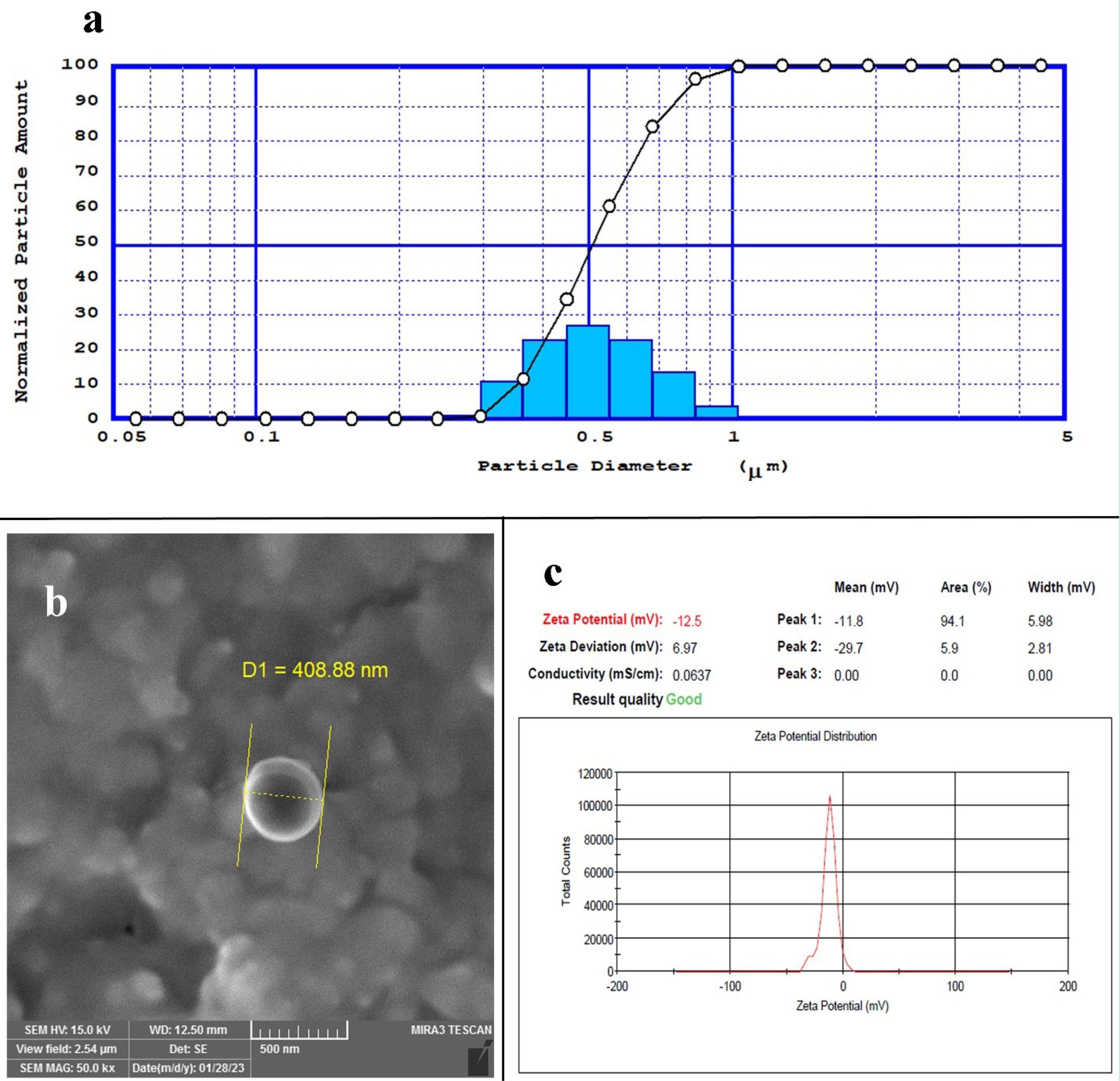
Fig. 1.
a. Particle size distribution, b. SEM image and zeta-potential of prepared NLC-Dut-GO.
.
a. Particle size distribution, b. SEM image and zeta-potential of prepared NLC-Dut-GO.
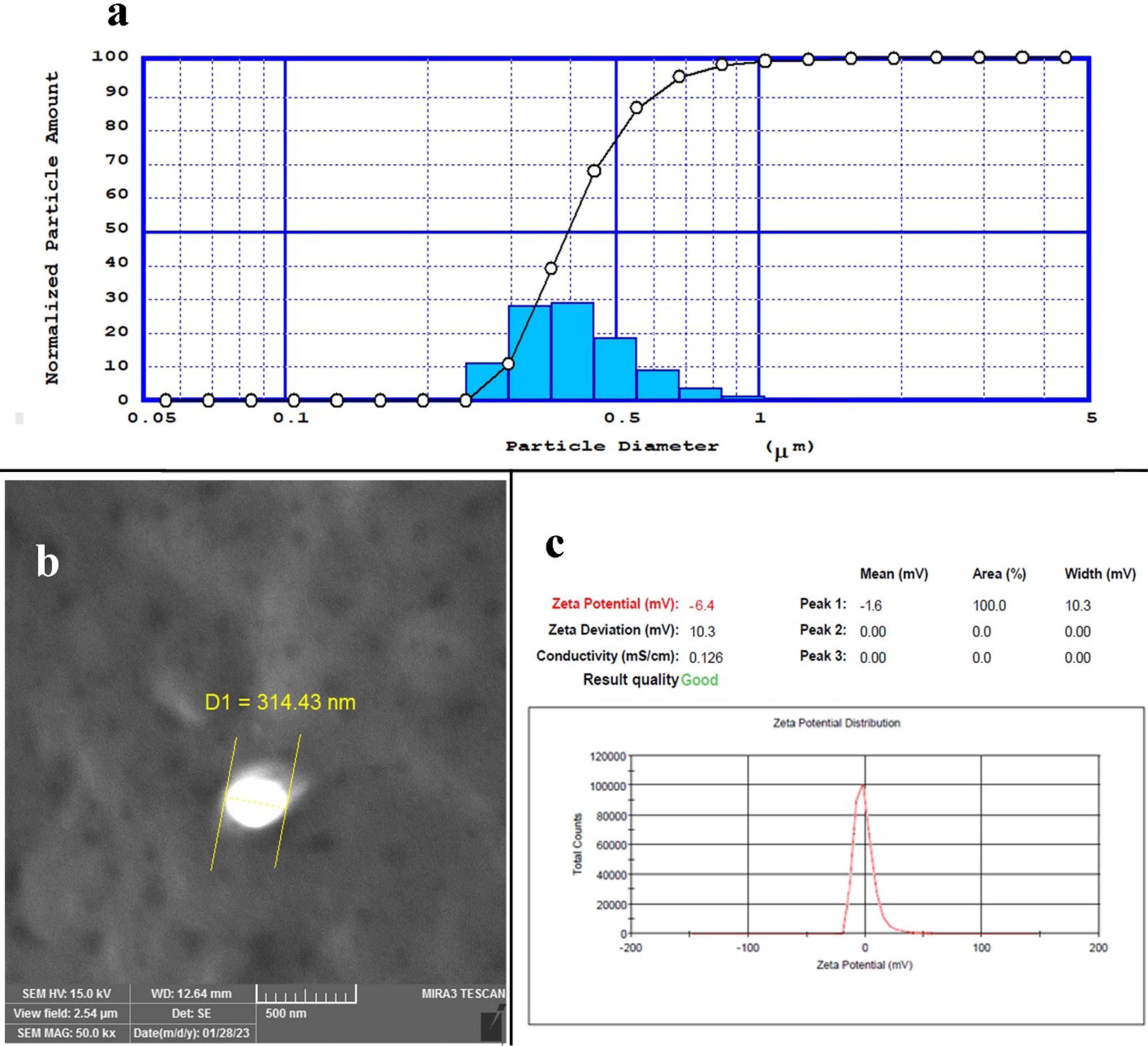
Fig. 2.
a. Particle size distribution, b. SEM image and zeta-potential of blank NLCs.
.
a. Particle size distribution, b. SEM image and zeta-potential of blank NLCs.
X-ray diffraction (XRD)
The XRD graphs of NLC-Dut-GO, PM, dutasteride powder, Precirol, PSO, SP, and GO, ate shown in Fig. 3 the main sharp peaks of GO and Dut in PM and were disappeared and therefore both compounds were amorphous implying that they were capable of easily penetrating from formulations to hair follicles and functioning as the anti-hair loss agents. Furthermore, SP and PSO were dissolved in Precirol since their sharp peaks were also disappeared in the PM and NLC-Dut-GO formulations. And they prevented Precirol (i.e., the solid lipid) from crystallization which facilitated preventing the variabilities of drug release followed by the drug leaking from the crystalized solid lipid part.59 And also we observed that after 12 months the crystallization had not happened due to XRD graph of the stability sample, therefore the prepared NLCs showed a favorable stability in 12 months at room temperature.
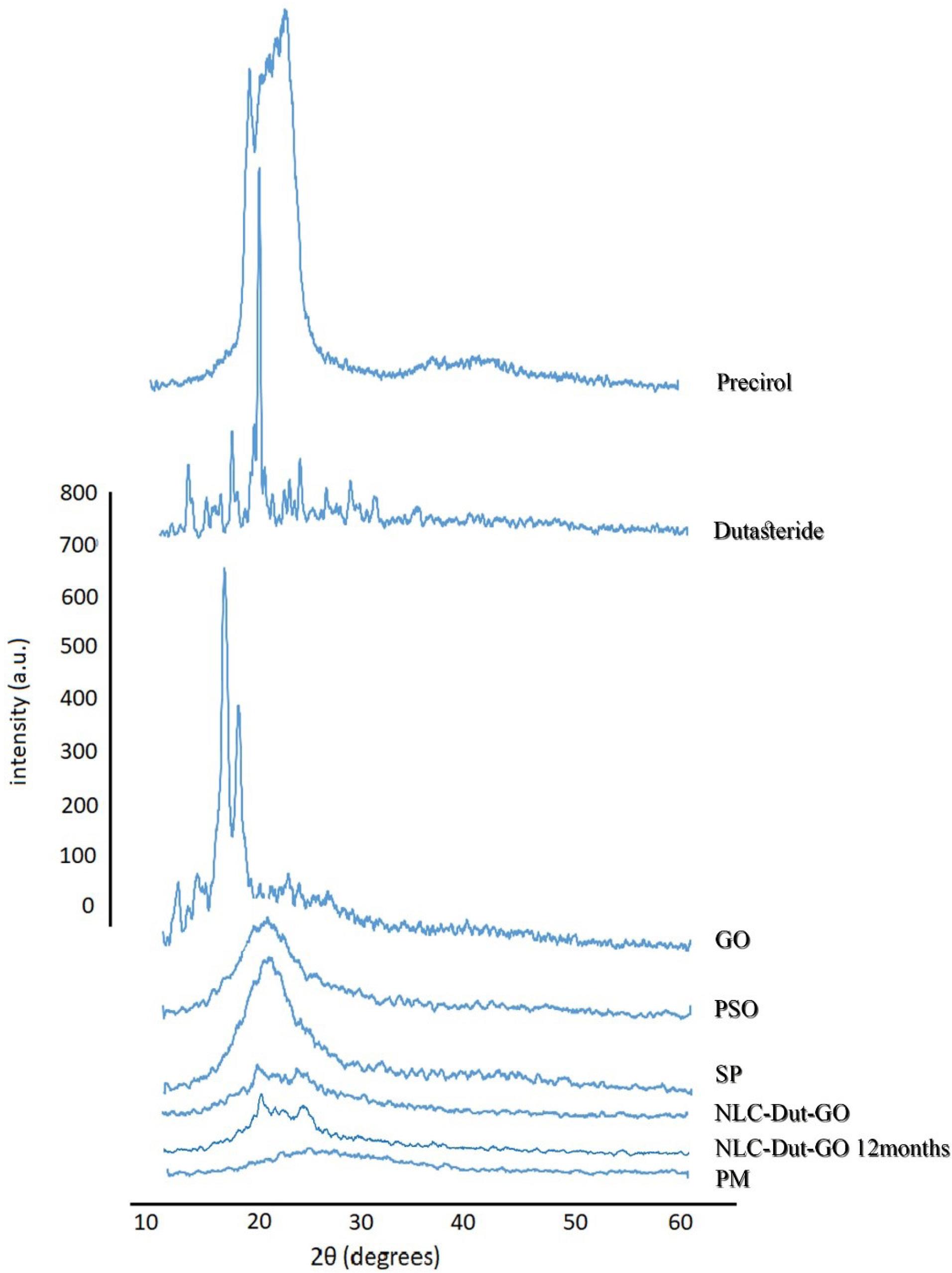
Fig. 3.
X-ray diffraction graphs of Precirol, Dutasteride, Gamma-oryzanol (GO), Pumpkin seed oil (PSO), saw palmetto (SP), dutasteride and gamma-oryzanol and dutasteride loaded NLCs (NLC-Dut-GO), the stability sample of NLC-Dut-GO after 12 months and Physical mixture of all ingredients (PM).
.
X-ray diffraction graphs of Precirol, Dutasteride, Gamma-oryzanol (GO), Pumpkin seed oil (PSO), saw palmetto (SP), dutasteride and gamma-oryzanol and dutasteride loaded NLCs (NLC-Dut-GO), the stability sample of NLC-Dut-GO after 12 months and Physical mixture of all ingredients (PM).
FTIR analysis
The FTIR analysis had undertaken to confirm the formation of nanoparticles and to identify probable interactions between components during the fabrication of NLCs via comparing the FTIR spectra of drug-loaded nano-particles, blank nano-particles, and pure drugs.60 FTIR spectra of pure Dut, pure GO, NLC-Dut-GO and blank NLCs are presented in Fig. 4 the blank NLCs and NLC-Dut-GO spectra are very similar with a little difference in 2963 cm-1 peak in NLC-Dut-GO, that shows the encapsulation of GO in NLCs, and in 1515 cm-1 there is a short peak in Dut, that appears in NLC-Dut-GO too and this can confirm the encapsulation of Dut in the prepared NLCs. No new peaks were observed not in blank NLCs nor NLC-Dut-GO, and according to this, there are not any interactions or complexations and degradation of encapsulated drugs during the encapsulation process and therefore the encapsulated drugs are intact.
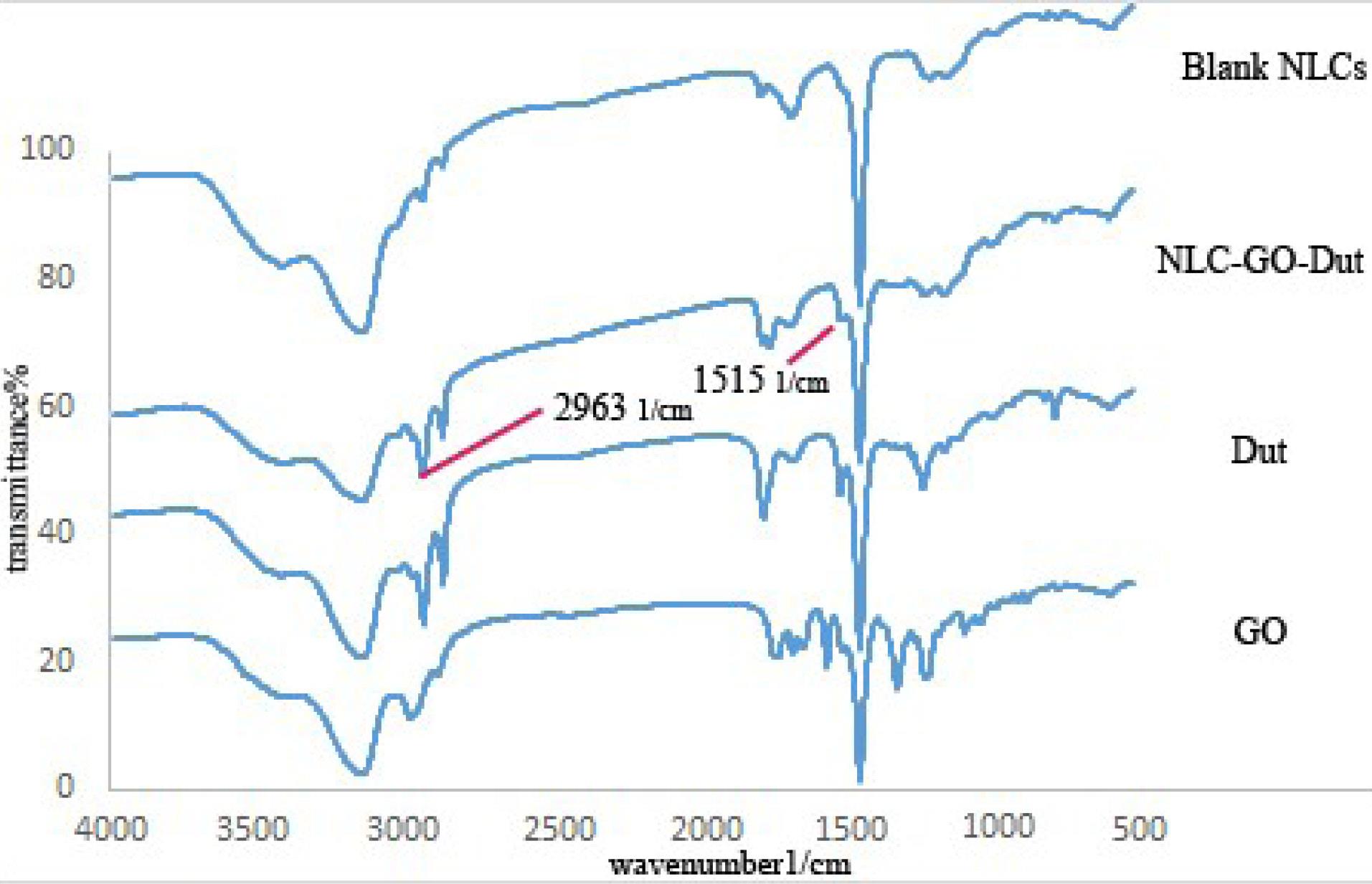
Fig. 4.
FTIR analysis of GO powder, Dut powder, Blank NLCs and NLC-Dut-GO. The main differentiations between blank and drug loaded NLCs have shown in the image with red lines
.
FTIR analysis of GO powder, Dut powder, Blank NLCs and NLC-Dut-GO. The main differentiations between blank and drug loaded NLCs have shown in the image with red lines
Encapsulation efficiency and loading capacity
The result of HPLC analysis for dutasteride was reported as 2.19 ± 0.084 mg and the result of UV-visible analysis for GO was reported as 94.5 ± 0.7 mg. The EE% and LC% of the loading dutasteride and GO in the lipid phase are shown in Table 1.
Table 1.
Entrapment efficiency and loading capacity of loaded dutasteride and GO in prepared NLCs
|
|
EE%
|
LC%
|
| Dutasteride |
87.8 ± 0.3% |
9.02 ± 0.25% |
| Gamma-oryzanol |
94.5 ± 0.7 % |
9.947 ± 0.084 % |
Dutasteride:
GO:
NLCs are nanoparticulated lipid carriers and are composed of solid lipids and liquid oils, these carriers can easily encapsulate the lipophilic drugs due to their lipophilic structure. dutasteride and GO, are two highly lipophilic substances and encapsulated more than 87% and 94% for dutasteride and GO respectively. Several other published studies, have confirmed that NLCs can entrap the lipophilic drugs in a high percentage (higher than 80%),61-64 which was consistent with our study results since a percentage higher than 87 and even a percentage about 95 were recorded for dutasteride and GO, respectively, in our study.
Stability study
The results of the long-term stability study in a room temperature on the prepared samples of NLC-Dut-GO are shown in Table 2. According to the results of this stability study, 78.61% of dutasteride and 83.8% of GO were encapsulated in NLCs after 12 months, which implied that the change in EE% was less than 10% for dutasteride and 11.3% for GO even after 12 months and that the change in particle size distribution was less than 93nm. NLCs are a new generations of SLNs, which have shown very good stability in comparison with SLNs in several other studies,65-68 SLNs are lipidic nanoparticulated carriers composed of the solid lipids, and NLCs have liquid oil as a part of their structure, in addition to solid lipid, and this liquid part facilitates preventing the solid lipid part crystallization and finally the leakage or explosion of the encapsulated compound from NLCs in their shelf life, which makes NLCs more stable than SLNs.69-71 In this study, the NLC-Dut-GO showed extremely great stability as well. Even after 12 months, the particle size distribution and EE% remained unchanged in comparison with the particle size distribution and EE% of the freshly prepared NLCs of more than 93nm and 11% respectively. Furthermore, an XRD analysis was performed for the 12-months sample of NLC-Dut-GO formulation (Fig. 3), the peaks are similar to freshly prepared NLCs and so the graph confirms that after 12 months, the NLCs solid lipid part (i.e., Precirol) has not crystallized and therefore, the explosion and burst release of loaded drugs (the main stability problem of lipid nanoparticles) will not happen at least within 12 months of storage. This was suggestive of the fact that the prepared formulation was stable at room temperature for at least 12 months.
Table 2.
Stability study results after 3, 6, and 12 months in room temperature vs. freshly prepared NLC- Dut-GO
|
|
Fresh NLCs
|
After 3 months
|
After 6 months
|
After 12 months
|
| Median volume diameter (MVD) |
413 ± 47 nm |
428 ± 87 nm |
479 ± 46nm |
506 ± 78 nm |
| EE% for dutasteride |
87.8 ± 0.3 % |
87.64 ± 0.2 % |
86.96 ± 0.4 % |
78.61 ± 1.3 % |
| EE% for GO |
94.5 ± 0.7 % |
93.7 ± 1.5 % |
93.2 ± 2.8 % |
83.8 ± 4 % |
The particle size distribution and entrapment efficiency (EE%) of the loaded gamma-oryzanol (GO) as well as dutasteride in stability samples and freshly prepared NLCs are shown.
Particle size changes were statistically analyzed by paired t-test (IBM SPSS software, version 26) and the change in particle size was not significant according to P > 0.05, and it confirms the stability of prepared NLCs after 12 months storage at room temperature.
Release study
The target site of this formulation is the hair follicle and, therefore, the aqueous release medium is not an appropriate release environment for an in-vitro study on the release profile, in a study by Rancan et al, an oily release medium (i.e., isopropyl myristate) was selected,72 but the release medium did not match the sink condition. In our study the sink condition was used, Although this condition was unable to simulate the skin environment completely and it was only confirmed that the prepared formulation had the potential to release the loaded drug in the target site without degrading the loaded drug or complexing with the carrier, however, the release profile and the timeline of release cannot be simulated by in-vitro study, because skin and hair follicle units are composed of compacted cells, meanings that the release area of the target site is composed of more solid-state than the liquid state, and that this area cannot mimic with only an oily medium. According to the in-vitro release study, 78.12 ± 5.3 % of the loaded dutasteride and 93.25 ± 2.1 % of the loaded GO were released in the first 30 minutes. Which remained unchanged even after 24 hours due to the partitioning of loaded drug during the oily phase (i.e., isopropyl myristate- isopropyl alcohol and Precirol). The latter showed that the encapsulated drugs, had the potential to release after penetration into hair follicle units, as for their release profile, and since the in-vitro release media failed to completely simulate the hair follicle environment, however no thorough discussion was presented about that, before developing a complete matching in-vitro release medium.
In-vivo studies
All mice groups were photographed at the beginning and end of the study (Fig. 5, where, the photos on the left are the mice on day 0, and those on the right are mice on day 14). and H&E staining slides (Fig. 6) from the dorsal skin of mice (i.e., the treated area) were performed after 14 days. Group a was the control group in our study, and therefore received neither an AGA induction nor a treatment. As displayed in (Fig. 5a), the shaved area was covered by hair in the usual manner after 14 days. Group b only included the testosterone applied mice for AGA induction and they received no treatment as AGA medication. The hair regrowth in group b, did not occur completely after 14 days, so that nearly half of the shaved area was not covered by hair. Group c after AGA induction by testosterone, was treated with topical minoxidil as an FDA-approved topical treatment of AGA, and the hair loss was partially prevented by medication after 14 days. In group d, the group treated with blank NLCs after AGA induction, at the end of study in this group we observed that the blank NLCs, has prevented the hair loss because the blank NLCs are composed of SP and PSO as its liquid lipid, these two herbal extracts act as 5-alpha reductase inhibitors and prevented induction of AGA, but not totally and in some parts of skin hair loss was happened (it was as effective as FDA-approved, minoxidil, treated group). In group e, after AGA induction, the area was treated with NLC-Dut-GO and in almost all shaved area was covered with new hair after 14 days, suggesting that the formulation had the potential to prevent the effects of testosterone and hair loss, and that was even more effective than the FDA-approved treatment (minoxidil) and after 14 days of discontinuing the hair growth are still in the normal way (Fig. 7b). In group f, the shaved area was treated with PM after AGA induction by testosterone, it was found more effective than the FDA-approved treatment although it was not as complete as the NLC-Dut-GO treated group, which may have been attributed to, more favorable penetration and accumulation of NLCs compared to dispersion form of ingredients, after two weeks of discontinued treatment, the AGA symptom -hair loss is back (Fig. 7a). Fig. 6 presents the histopathology images of in-vivo mice study groups biopsies stained with Hematoxylin and Eosin (H&E) staining, according to Fig. 6d-f, had more hair follicles than the control and testosterone groups, as well as the FDA-approved treatment. The differences between the NLC-Dut-GO treated group with and other study groups was significant, so that there were several new hair follicles in biopsies of the group e even two weeks after the discontinued usage of NLC-Dut-GO (Fig. 8b), furthermore, the induction of AGA by testosterone was continued during in this two weeks (day 14-28), suggesting that the NLCs were accumulated in the hair follicles and that they were slowly released, thereby blocking the effects of testosterone in these two weeks. As to Fig 6d and 6e, for groups treated with blank NLCs and PM respectively, an increase was also detected in hair follicles (less than the increase in the NLC-Dut-GO group), which may have been due to SP and PSO’s 5-alpha reductase inhibitory effects; Moreover, the oils penetration enhancer,73,74 helped GO and Dutasteride to reach to hair follicles, but, the number of follicles decreased after two weeks discontinuing of usage of PM and the advantage of NLC-Dut-GO formulation, is the accumulation and depot of particles in hair follicles and this helps to reduce the frequency of drug use and so the acceptance of treatment by consumer will increase. In addition, the group treated with minoxidil had fewer new follicles than other treatment groups which was indicative of a failure in treating majority of the cases with this drug.75,76 Although there are some published studies on topical drug delivery of GO57,77 dutasteride-loaded nanoparticles,78-81 they are all limited to in vitro studies, in our study, however, the in-vivo effects of NLCs on the depot as well as drug delivery of dutasteride and GO to hair follicles were confirmed. The blank NLCs (herbal extracts) and PM, produced more favorable results but the NLC-Dut-GO completely returned the effects of testosterone and the number of hair follicles increased more than other treated groups even after 2 weeks of discontinuing medication and then the best formulation of this study for preventing AGA is GO and dutasteride-NLCs (NLC-Dut-GO). According to human-animal dose calculations,82 the equal mice daily dose of dutasteride is 40 µg (the human daily dose is 0.5 mg83); in our study, the dose of dutasteride was decreased to 10 µg in three days as below:
2.5 mg dutasteride was encapsulated in 25 ml of NLCs. Then 100 µl of NLCs was applied topically to the dorsal skin of mice every three days so that the dutasteride dose was lowered to 10 µg per three days.
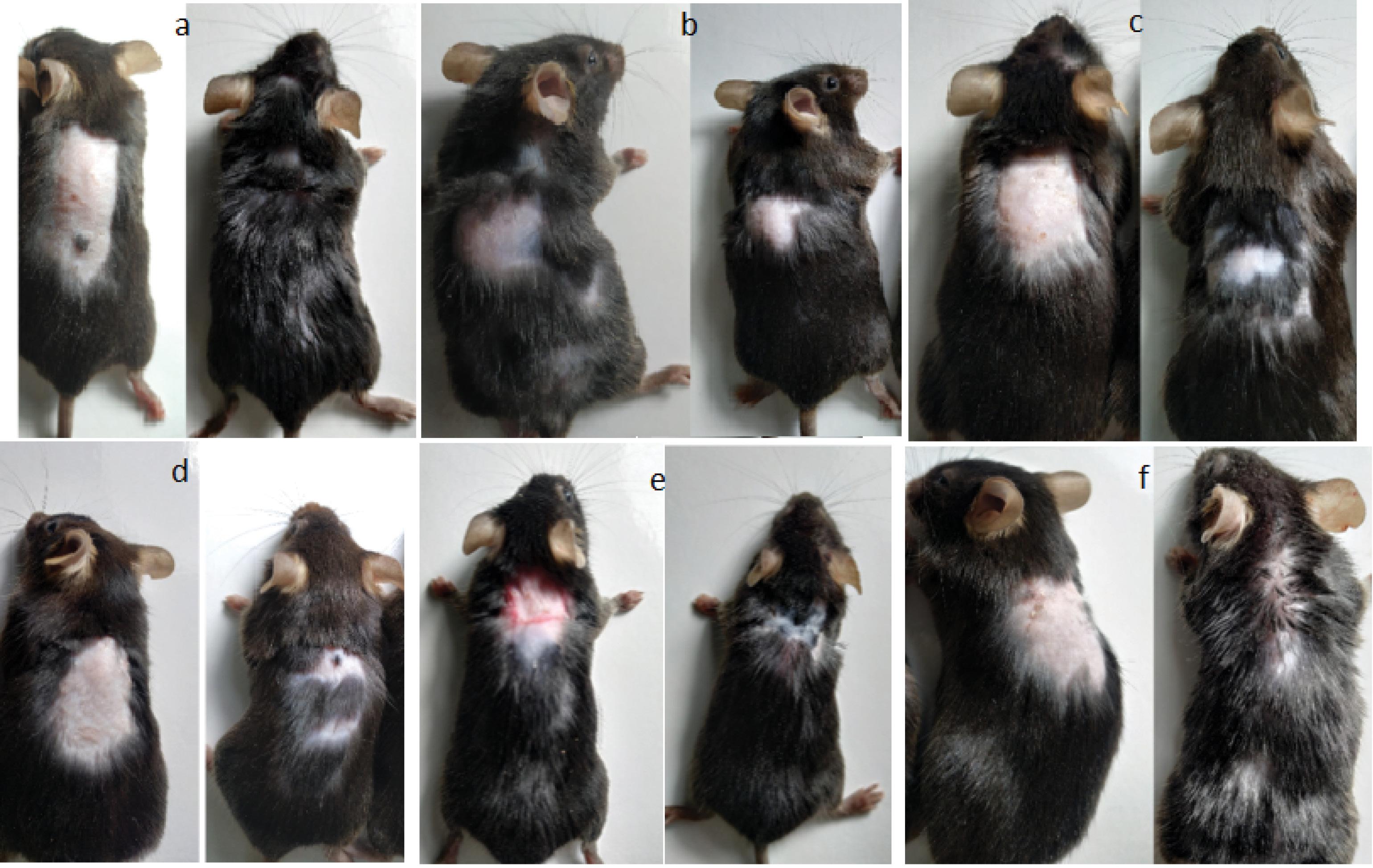
Fig. 5.
In-vivo studies on dorsal skin of mice groups. The right picture of each group were taken at day 0, and, the left picture of each group day 14. The groups are: a. control group, b. testosterone-induced androgenic alopecia group, c. daily minoxidil treated group, d. daily blank-NLCs treated group, e. the group treated daily with Physical Mixture of dutasteride. gamma oryzanol, pumpkin seed oil and saw palmetto, f. every 3days dutasteride and gamma-oryzanol loaded NLCs treated group.
.
In-vivo studies on dorsal skin of mice groups. The right picture of each group were taken at day 0, and, the left picture of each group day 14. The groups are: a. control group, b. testosterone-induced androgenic alopecia group, c. daily minoxidil treated group, d. daily blank-NLCs treated group, e. the group treated daily with Physical Mixture of dutasteride. gamma oryzanol, pumpkin seed oil and saw palmetto, f. every 3days dutasteride and gamma-oryzanol loaded NLCs treated group.
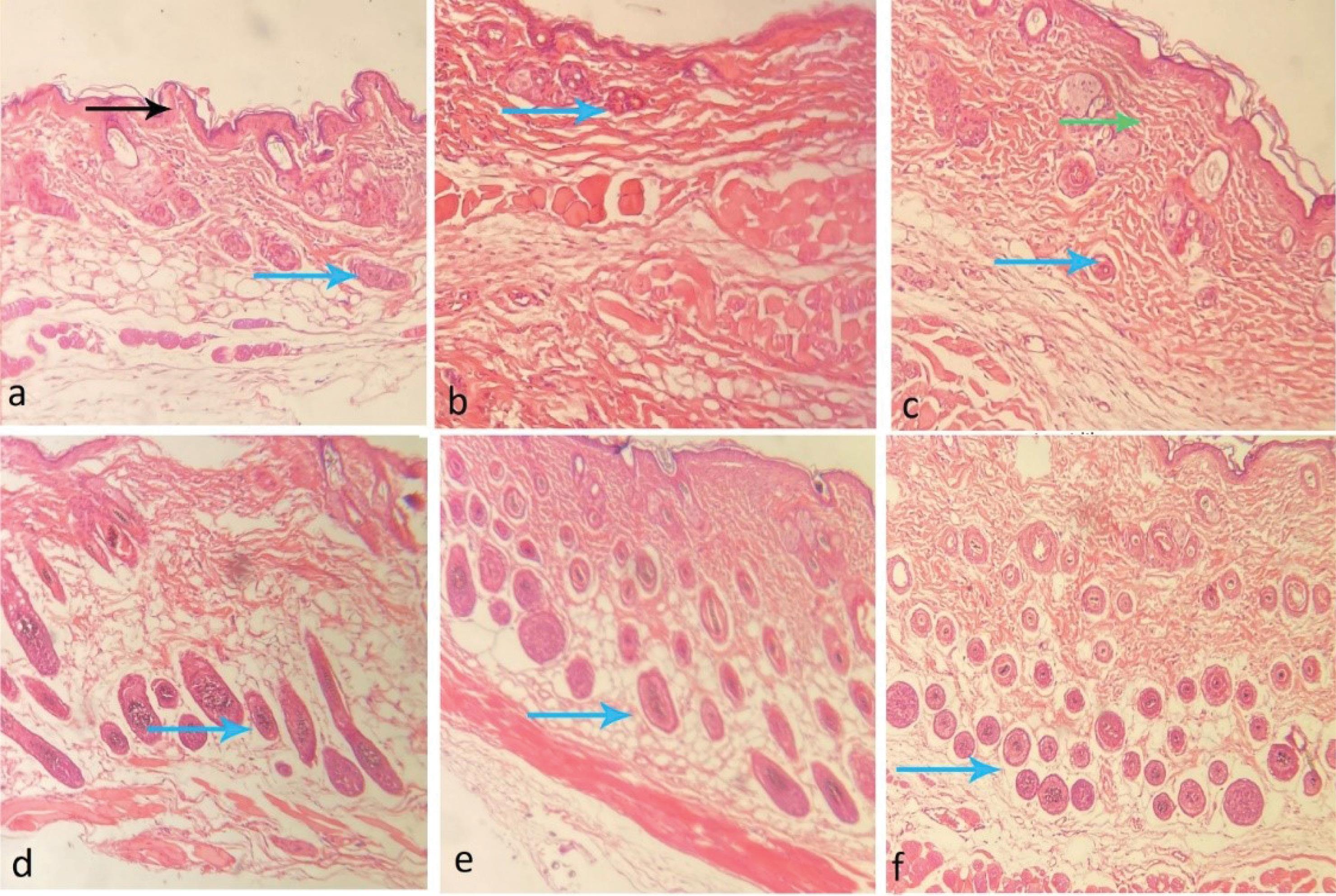
Fig. 6.
The histopathologic study of AGA in mice model, the biopsies were taken after 14 days of treatment. The groups are: a. control group, b. testosterone-induced androgenic alopecia group, c. daily minoxidil treated group, d. daily blank-NLCs treated group, e. the group treated daily with Physical Mixture of dutasteride. gamma oryzanol, pumpkin seed oil and saw palmetto, f. every 3days dutasteride and gamma-oryzanol loaded NLCs treated group. The epidermis layer of skin is shown by black arrow, the dermis layer is shown by green arrow and the hair follicle located in hypodermis layer are shown with blue arrows. The magnification of all slides are × 50.
.
The histopathologic study of AGA in mice model, the biopsies were taken after 14 days of treatment. The groups are: a. control group, b. testosterone-induced androgenic alopecia group, c. daily minoxidil treated group, d. daily blank-NLCs treated group, e. the group treated daily with Physical Mixture of dutasteride. gamma oryzanol, pumpkin seed oil and saw palmetto, f. every 3days dutasteride and gamma-oryzanol loaded NLCs treated group. The epidermis layer of skin is shown by black arrow, the dermis layer is shown by green arrow and the hair follicle located in hypodermis layer are shown with blue arrows. The magnification of all slides are × 50.
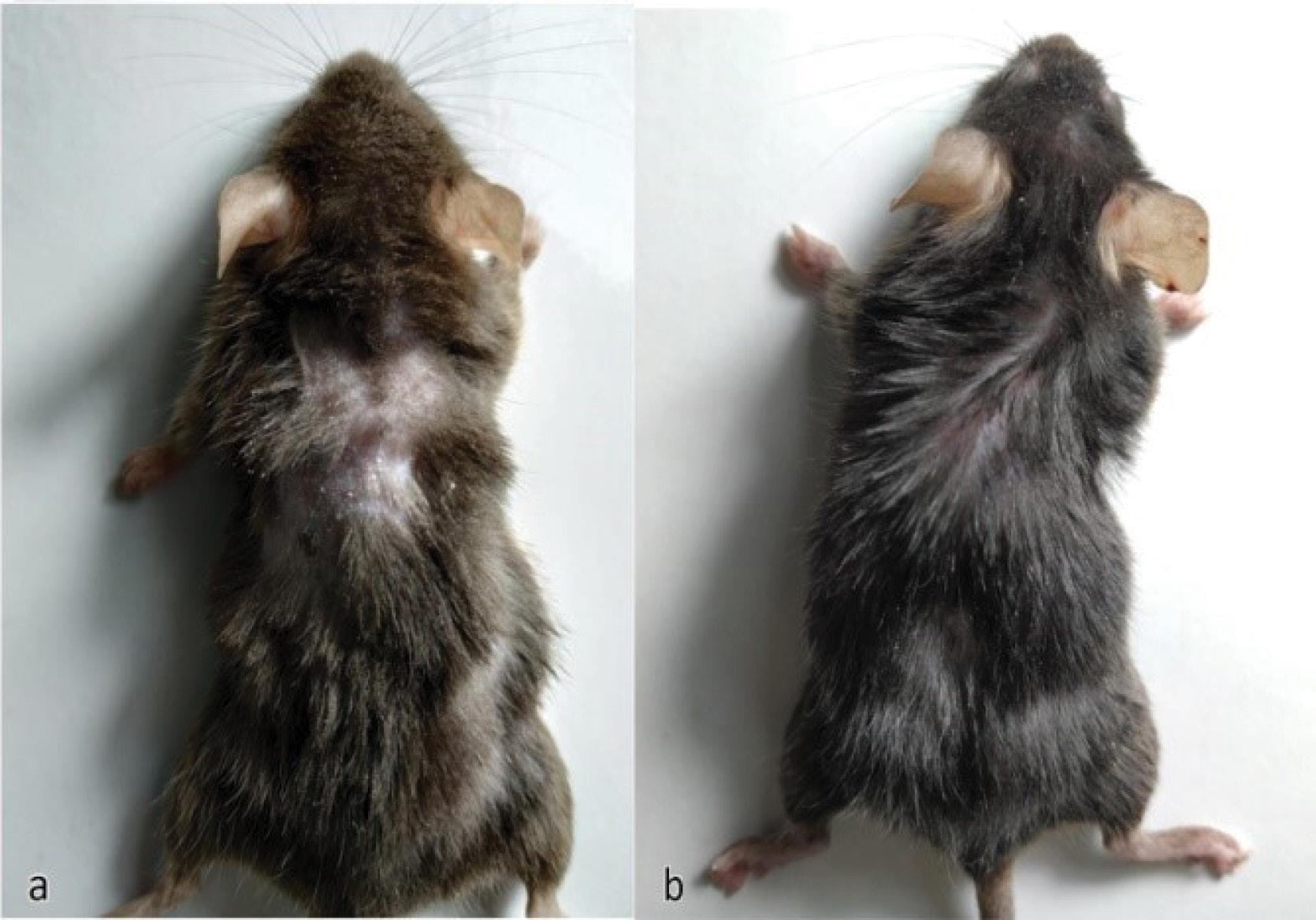
Fig. 7.
Mice groups after 2 weeks of discontinuing treatment. a. the group treated with Physical mixture of dutasteride, gamma oryzanol, pumpkin seed oil, and saw palmetto. and, b. the group treated with dutasteride and gamma-oryzanol loaded NLCs.
.
Mice groups after 2 weeks of discontinuing treatment. a. the group treated with Physical mixture of dutasteride, gamma oryzanol, pumpkin seed oil, and saw palmetto. and, b. the group treated with dutasteride and gamma-oryzanol loaded NLCs.
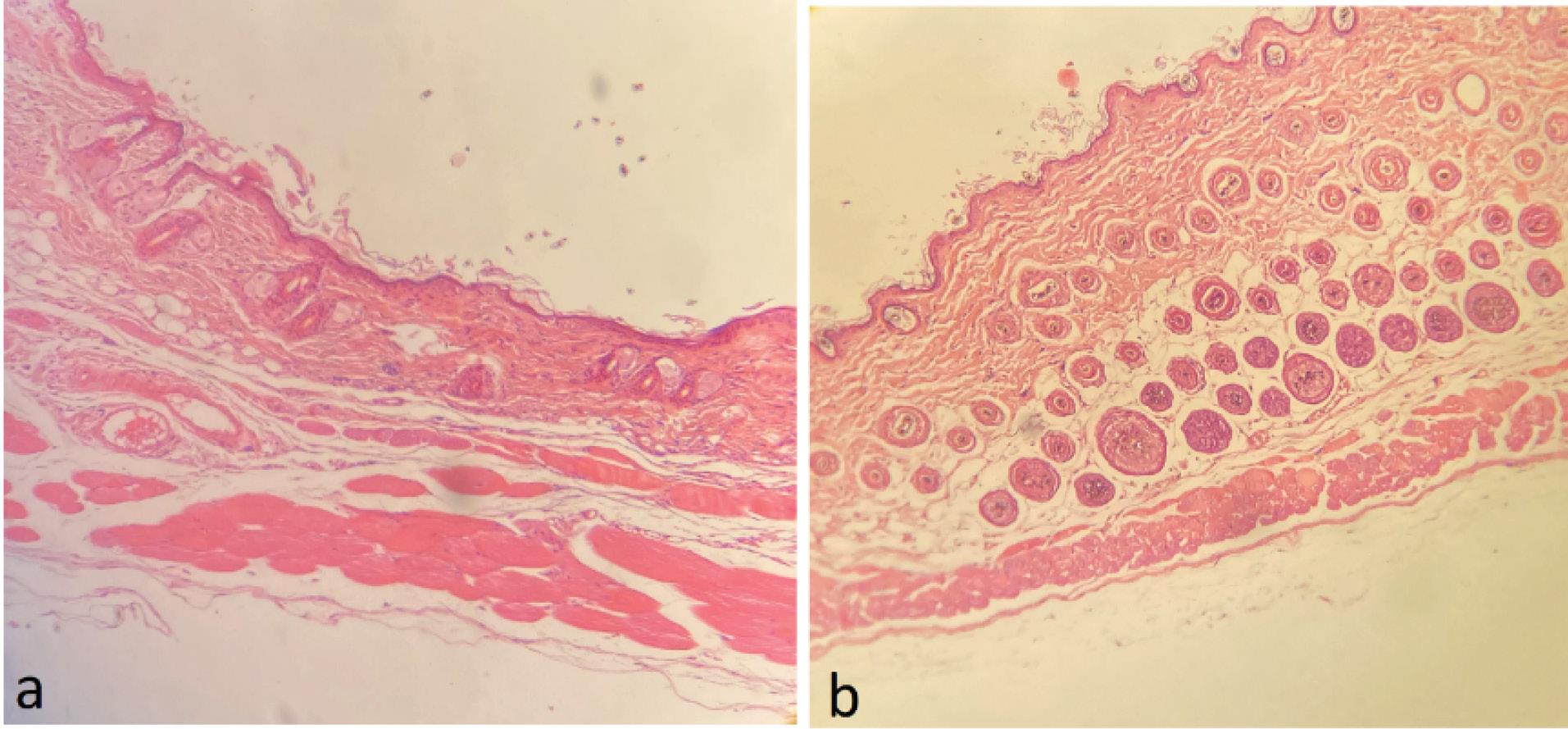
Fig. 8.
The histopathological H&E staining of mice groups after 2 weeks of discontinuing treatment. a. the group treated with Physical mixture of dutasteride, gamma oryzanol, pumpkin seed oil, and saw palmetto. and, b. the group treated with dutasteride and gamma-oryzanol loaded NLCs. The magnification of all slides is × 50
.
The histopathological H&E staining of mice groups after 2 weeks of discontinuing treatment. a. the group treated with Physical mixture of dutasteride, gamma oryzanol, pumpkin seed oil, and saw palmetto. and, b. the group treated with dutasteride and gamma-oryzanol loaded NLCs. The magnification of all slides is × 50
As for PM formulation, the dutasteride dose was lowered to 10 µg on a daily basis due to the SP and PS0 and GO anti-5-alpha reductase effects and therefore extremely favorable outcomes were achieved even for blank NLCs indicating the potency of the herbal oils in anti-hair loss activity.
Conclusion
In summary, the ability of NLCs to target and accumulating the dutasteride and GO in hair follicles contributed to decrease the dose of dutasteride to 10 µg every three days (i.e., approximately 8.3% of the daily mouse dose, 40 µg), when compared with PM formulation which was used on a daily basis. This finding was even confirmed by the histopathological result showing that the NLC-Dut-GO was more effective than the daily PM despite its application once every three days. The histopathological results also revealed that nanoparticles, preserved their anti-hair loss effect even two weeks after a discontinued treatment which confirmed the depot of dutasteride and GO in hair follicles as well as the release of loaded drug for at least two weeks, therefore, the drug usage intervals may have been increased to more than 14 days, thereby, resulting in more favorable patient compliance and more satisfactory treatment outcomes since the drug is released from carrier with a prolonged and appropriate rate instead of dose fluctuations due to the daily topical or oral administration. Also, the limitations of this study are the lack of in vivo experiments about the effect of dutasteride solution and gamma-oryzanol solution topically and orally and the comparison of these different formulations with NLC-Dut-GO, on AGA and hair regrowth; the only descriptive comparison of histopathologic images is another limitation for this study and it is suggested that to perform a quantified and statistical analysis of the NLC-Dut-GO effect in AGA treatment to obtain an optimum dosage of medication and appropriate usage intervals.
Research Highlights
What is the current knowledge?
What is new here?
-
Follicular co-delivery of gamma-oryzanol and dutasteride, via nanostructured lipid carriers, made up of natural oils with anti-androgenic alopecia effect, to reduce the daily dose of dutasteride and even increase the usage intervals of medication up to 1 in a week or more, due to follicular accumulation of NLCs; the latter was confirmed with histopathological studies in mouse study model.
Competing Interests
The authors declare that they have no conflict of interest.
Ethical Approval
All the in-vivo study protocols were approved by the Ethics Committee of Tabriz University of Medical Sciences, Tabriz, Iran (code: IR.TBZMED.REC.1399.406).
Acknowledgements
We would like to appreciate the cooperation of the Clinical Research Development Unit of Imam Reza General Hospital, Tabriz, Iran in conducting this research
References
-
Sonmez D, Hocaoglu C. Psychological aspect of alopecia. In: Alopecia Management-An Update. IntechOpen; 2022. doi: 10.5772/intechopen.106132.
- Aukerman EL, Jafferany M. The psychological consequences of androgenetic alopecia: a systematic review. J Cosmet Dermatol 2023; 22:89-95. doi: 10.1111/jocd.14983 [Crossref] [ Google Scholar]
- Gupta S, Goyal I, Mahendra A. Quality of life assessment in patients with androgenetic alopecia. Int J Trichology 2019; 11:147-52. doi: 10.4103/ijt.ijt_6_19 [Crossref] [ Google Scholar]
- Nguyen DD, Cone EB, Trinh QD. Association of hair loss with suicidality and psychological adverse events vs finasteride use-reply. JAMA Dermatol 2021; 157:738. doi: 10.1001/jamadermatol.2021.0377 [Crossref] [ Google Scholar]
- Gordon KA, Tosti A. Alopecia: evaluation and treatment. Clin Cosmet Investig Dermatol 2011; 4:101-6. doi: 10.2147/ccid.s10182 [Crossref] [ Google Scholar]
- Lolli F, Pallotti F, Rossi A, Fortuna MC, Caro G, Lenzi A. Androgenetic alopecia: a review. Endocrine 2017; 57:9-17. doi: 10.1007/s12020-017-1280-y [Crossref] [ Google Scholar]
- Trüeb RM. Molecular mechanisms of androgenetic alopecia. Exp Gerontol 2002; 37:981-90. doi: 10.1016/s0531-5565(02)00093-1 [Crossref] [ Google Scholar]
- Sinclair R, Torkamani N, Jones L. Androgenetic alopecia: new insights into the pathogenesis and mechanism of hair loss. F1000Res 2015; 4:585. doi: 10.12688/f1000research.6401.1 [Crossref] [ Google Scholar]
- Whiting DA. Possible mechanisms of miniaturization during androgenetic alopecia or pattern hair loss. J Am Acad Dermatol 2001; 45:S81-6. doi: 10.1067/mjd.2001.117428 [Crossref] [ Google Scholar]
- Alonso L, Fuchs E. The hair cycle. J Cell Sci 2006; 119:391-3. doi: 10.1242/jcs.02793 [Crossref] [ Google Scholar]
- Azzouni F, Godoy A, Li Y, Mohler J. The 5 alpha-reductase isozyme family: a review of basic biology and their role in human diseases. Adv Urol 2012; 2012:530121. doi: 10.1155/2012/530121 [Crossref] [ Google Scholar]
- Ashique S, Sandhu NK, Haque SN, Koley K. A systemic review on topical marketed formulations, natural products, and oral supplements to prevent androgenic alopecia: a review. Nat Prod Bioprospect 2020; 10:345-65. doi: 10.1007/s13659-020-00267-9 [Crossref] [ Google Scholar]
- Grymowicz M, Rudnicka E, Podfigurna A, Napierala P, Smolarczyk R, Smolarczyk K. Hormonal effects on hair follicles. Int J Mol Sci 2020; 21:5342. doi: 10.3390/ijms21155342 [Crossref] [ Google Scholar]
- Katzer T, Leite Junior A, Beck R, da Silva C. Physiopathology and current treatments of androgenetic alopecia: going beyond androgens and anti-androgens. Dermatol Ther 2019. 32: e13059. doi: 10.1111/dth.13059.
- Lee SW, Juhasz M, Mobasher P, Ekelem C, Mesinkovska NA. A systematic review of topical finasteride in the treatment of androgenetic alopecia in men and women. J Drugs Dermatol 2018; 17:457-63. [ Google Scholar]
- Hajheydari Z, Akbari J, Saeedi M, Shokoohi L. Comparing the therapeutic effects of finasteride gel and tablet in treatment of the androgenetic alopecia. Indian J Dermatol Venereol Leprol 2009; 75:47-51. doi: 10.4103/0378-6323.45220 [Crossref] [ Google Scholar]
- Piraccini BM, Blume-Peytavi U, Scarci F, Jansat JM, Falqués M, Otero R. Efficacy and safety of topical finasteride spray solution for male androgenetic alopecia: a phase III, randomized, controlled clinical trial. J Eur Acad Dermatol Venereol 2022; 36:286-94. doi: 10.1111/jdv.17738 [Crossref] [ Google Scholar]
- Suchonwanit P, Iamsumang W, Leerunyakul K. Topical finasteride for the treatment of male androgenetic alopecia and female pattern hair loss: a review of the current literature. J Dermatolog Treat 2022; 33:643-8. doi: 10.1080/09546634.2020.1782324 [Crossref] [ Google Scholar]
- Stough D. Dutasteride improves male pattern hair loss in a randomized study in identical twins. J Cosmet Dermatol 2007; 6:9-13. doi: 10.1111/j.1473-2165.2007.00297.x [Crossref] [ Google Scholar]
- Jung JY, Yeon JH, Choi JW, Kwon SH, Kim BJ, Youn SW. Effect of dutasteride 05 mg/d in men with androgenetic alopecia recalcitrant to finasteride. Int J Dermatol 2014; 53:1351-7. doi: 10.1111/ijd.12060 [Crossref] [ Google Scholar]
- Tsunemi Y, Irisawa R, Yoshiie H, Brotherton B, Ito H, Tsuboi R. Long-term safety and efficacy of dutasteride in the treatment of male patients with androgenetic alopecia. J Dermatol 2016; 43:1051-8. doi: 10.1111/1346-8138.13310 [Crossref] [ Google Scholar]
-
Gubelin Harcha W, Barboza Martínez J, Tsai TF, Katsuoka K, Kawashima M, Tsuboi R, et al. A randomized, active- and placebo-controlled study of the efficacy and safety of different doses of dutasteride versus placebo and finasteride in the treatment of male subjects with androgenetic alopecia. J Am Acad Dermatol 2014; 70: 489-98.e3. doi: 10.1016/j.jaad.2013.10.049.
- Arif T, Dorjay K, Adil M, Sami M. Dutasteride in androgenetic alopecia: an update. Curr Clin Pharmacol 2017; 12:31-5. doi: 10.2174/1574884712666170310111125 [Crossref] [ Google Scholar]
- Herman A, Herman AP. Mechanism of action of herbs and their active constituents used in hair loss treatment. Fitoterapia 2016; 114:18-25. doi: 10.1016/j.fitote.2016.08.008 [Crossref] [ Google Scholar]
- Dhariwala MY, Ravikumar P. An overview of herbal alternatives in androgenetic alopecia. J Cosmet Dermatol 2019; 18:966-75. doi: 10.1111/jocd.12930 [Crossref] [ Google Scholar]
- Kalwat JI. The use of Serenoa repens (saw palmetto) in hair care products. Biomed J Sci Tech Res 2019; 13:9725-8. doi: 10.26717/bjstr.2019.13.002348 [Crossref] [ Google Scholar]
- Cho YH, Lee SY, Jeong DW, Choi EJ, Kim YJ, Lee JG. Effect of pumpkin seed oil on hair growth in men with androgenetic alopecia: a randomized, double-blind, placebo-controlled trial. Evid Based Complement Alternat Med 2014; 2014:549721. doi: 10.1155/2014/549721 [Crossref] [ Google Scholar]
- Goluch-Koniuszy ZS. Nutrition of women with hair loss problem during the period of menopause. Prz Menopauzalny 2016; 15:56-61. doi: 10.5114/pm.2016.58776 [Crossref] [ Google Scholar]
- Panahi Y, Taghizadeh M, Marzony ET, Sahebkar A. Rosemary oil vs minoxidil 2% for the treatment of androgenetic alopecia: a randomized comparative trial. Skinmed 2015; 13:15-21. [ Google Scholar]
- Dou J, Zhang Z, Xu X, Zhang X. Exploring the effects of Chinese herbal ingredients on the signaling pathway of alopecia and the screening of effective Chinese herbal compounds. J Ethnopharmacol 2022; 294:115320. doi: 10.1016/j.jep.2022.115320 [Crossref] [ Google Scholar]
- Dinkins J, Iwuala C, Akintilo L, Ugonabo N, Shapiro J, Sicco KL. Commonly used hair oils in the Black community: a narrative review in their use to treat androgenetic alopecia. Int J Dermatol 2023; 62:980-5. doi: 10.1111/ijd.16657 [Crossref] [ Google Scholar]
- Asnaashari S, Javadzadeh Y. Herbal medicines for treatment of androgenic alopecia. Altern Ther Health Med 2020; 26:27-35. [ Google Scholar]
- Abelan US, de Oliveira AC, Cacoci ÉS, Martins TE, Giacon VM, Velasco MV. Potential use of essential oils in cosmetic and dermatological hair products: a review. J Cosmet Dermatol 2022; 21:1407-18. doi: 10.1111/jocd.14286 [Crossref] [ Google Scholar]
- Khantham C, Linsaenkart P, Chaitep T, Jantrawut P, Chittasupho C, Rachtanapun P. Antioxidation, anti-inflammation, and regulation of SRD5A gene expression of Oryza sativa cv Bue Bang 3 CMU husk and bran extracts as androgenetic alopecia molecular treatment substances. Plants (Basel) 2022; 11:330. doi: 10.3390/plants11030330 [Crossref] [ Google Scholar]
- Serruya R, Maor Y. Hair growth-promotion effects at the cellular level and antioxidant activity of the plant-based extract PhyllotexTM. Heliyon 2021; 7:e07888. doi: 10.1016/j.heliyon.2021.e07888 [Crossref] [ Google Scholar]
- Prie BE, Iosif L, Tivig I, Stoian I, Giurcaneanu C. Oxidative stress in androgenetic alopecia. J Med Life 2016; 9:79-83. [ Google Scholar]
- Heydari S, Ghanbarzadeh S, Anoush B, Ranjkesh M, Javadzadeh Y, Kouhsoltani M. Nanoethosomal formulation of gammaoryzanol for skin-aging protection and wrinkle improvement: a histopathological study. Drug Dev Ind Pharm 2017; 43:1154-62. doi: 10.1080/03639045.2017.1300169 [Crossref] [ Google Scholar]
- Toorani MR, Golmakani MT, Hashemi Gahruie H. Antioxidant activity and inhibitory mechanism of γ-oryzanol as influenced by the unsaturation degree of lipid systems. LWT 2020; 133:109930. doi: 10.1016/j.lwt.2020.109930 [Crossref] [ Google Scholar]
- Zeinali M, Abbaspour-Ravasjani S, Soltanfam T, Paiva-Santos AC, Babaei H, Veiga F. Prevention of UV-induced skin cancer in mice by gamma oryzanol-loaded nanoethosomes. Life Sci 2021; 283:119759. doi: 10.1016/j.lfs.2021.119759 [Crossref] [ Google Scholar]
- Shivanand P, Nilam M, Viral D. Herbs play an important role in the field of cosmetics. Int J PharmTech Res 2010; 2:632-9. [ Google Scholar]
- Ashawat M, Banchhor M, Saraf S, Saraf S. Herbal cosmetics:" trends in skin care formulation". Pharmacogn Rev 2009; 3:82-9. [ Google Scholar]
- Lademann J, Richter H, Schaefer UF, Blume-Peytavi U, Teichmann A, Otberg N. Hair follicles - a long-term reservoir for drug delivery. Skin Pharmacol Physiol 2006; 19:232-6. doi: 10.1159/000093119 [Crossref] [ Google Scholar]
- Patzelt A, Lademann J. Drug delivery to hair follicles. Expert Opin Drug Deliv 2013; 10:787-97. doi: 10.1517/17425247.2013.776038 [Crossref] [ Google Scholar]
- Bilal M, Iqbal HM. New insights on unique features and role of nanostructured materials in cosmetics. Cosmetics 2020; 7:24. doi: 10.3390/cosmetics7020024 [Crossref] [ Google Scholar]
- Souto EB, Baldim I, Oliveira WP, Rao R, Yadav N, Gama FM. SLN and NLC for topical, dermal, and transdermal drug delivery. Expert Opin Drug Deliv 2020; 17:357-77. doi: 10.1080/17425247.2020.1727883 [Crossref] [ Google Scholar]
- Souto EB, Fangueiro JF, Fernandes AR, Cano A, Sanchez-Lopez E, Garcia ML. Physicochemical and biopharmaceutical aspects influencing skin permeation and role of SLN and NLC for skin drug delivery. Heliyon 2022; 8:e08938. doi: 10.1016/j.heliyon.2022.e08938 [Crossref] [ Google Scholar]
- Müller RH, Petersen RD, Hommoss A, Pardeike J. Nanostructured lipid carriers (NLC) in cosmetic dermal products. Adv Drug Deliv Rev 2007; 59:522-30. doi: 10.1016/j.addr.2007.04.012 [Crossref] [ Google Scholar]
- Pires FQ, da Silva JKR, Sa-Barreto LL, Gratieri T, Gelfuso GM, Cunha-Filho M. Lipid nanoparticles as carriers of cyclodextrin inclusion complexes: A promising approach for cutaneous delivery of a volatile essential oil. Colloids Surf B Biointerfaces 2019; 182:110382. doi: 10.1016/j.colsurfb.2019.110382 [Crossref] [ Google Scholar]
- Tampucci S, Paganini V, Burgalassi S, Chetoni P, Monti D. Nanostructured drug delivery systems for targeting 5-α-reductase inhibitors to the hair follicle. Pharmaceutics 2022; 14:286. doi: 10.3390/pharmaceutics14020286 [Crossref] [ Google Scholar]
- Heim S, Seibt S, Stier H, Moré MI. Uromedic® pumpkin seed derived Δ7-sterols, extract and oil inhibit 5α-reductases and bind to androgen receptor in vitro. Pharmacol Pharm 2018; 9:193-207. doi: 10.4236/pp.2018.96015 [Crossref] [ Google Scholar]
- Teeranachaideekul V, Parichatikanond W, Junyaprasert VB, Morakul B. Pumpkin seed oil-loaded niosomes for topical application: 5α-reductase inhibitory, anti-inflammatory, and in vivo anti-hair loss effects. Pharmaceuticals (Basel) 2022; 15:930. doi: 10.3390/ph15080930 [Crossref] [ Google Scholar]
- Suter A, Saller R, Riedi E, Heinrich M. Improving BPH symptoms and sexual dysfunctions with a saw palmetto preparation? Results from a pilot trial. Phytother Res 2013; 27:218-26. doi: 10.1002/ptr.4696 [Crossref] [ Google Scholar]
- Marks LS, Hess DL, Dorey FJ, Luz Macairan M, Cruz Santos PB, Tyler VE. Tissue effects of saw palmetto and finasteride: use of biopsy cores for in situ quantification of prostatic androgens. Urology 2001; 57:999-1005. doi: 10.1016/s0090-4295(00)01052-9 [Crossref] [ Google Scholar]
- Chatterjee S, Agrawala SK. Saw palmetto (Serenoa repens) in androgenic alopecia an effective phytotherapy. Nat Prod Radiance 2003; 2:302-5. [ Google Scholar]
- Gong EM, Gerber GS. Saw palmetto and benign prostatic hyperplasia. Am J Chin Med 2004; 32:331-8. doi: 10.1142/s0192415x04001989 [Crossref] [ Google Scholar]
- Manosroi A, Ruksiriwanich W, Manosroi W, Abe M, Manosroi J. In vivo hair growth promotion activity of gel containing niosomes loaded with the Oryza sativa bran fraction (OSF3). Adv Sci Lett 2012; 16:222-8. doi: 10.1166/asl.2012.3657 [Crossref] [ Google Scholar]
- Thitipramote N, Imsonpang S, Sukphopetch P, Pradmeeteekul P, Nimkamnerd J, Nantitanon W. Health benefits and safety of red pigmented rice (Oryza sativa L): in vitro, cellular, and in vivo activities for hair growth promoting treatment. Cosmetics 2022; 9:111. doi: 10.3390/cosmetics9060111 [Crossref] [ Google Scholar]
- Lademann J, Richter H, Teichmann A, Otberg N, Blume-Peytavi U, Luengo J. Nanoparticles--an efficient carrier for drug delivery into the hair follicles. Eur J Pharm Biopharm 2007; 66:159-64. doi: 10.1016/j.ejpb.2006.10.019 [Crossref] [ Google Scholar]
- Üner M. Preparation, characterization and physico-chemical properties of solid lipid nanoparticles (SLN) and nanostructured lipid carriers (NLC): their benefits as colloidal drug carrier systems. Pharmazie 2006; 61:375-86. [ Google Scholar]
- Alsulays BB, Anwer MK, Soliman GA, Alshehri SM, Khafagy ES. Impact of penetratin stereochemistry on the oral bioavailability of insulin-loaded solid lipid nanoparticles. Int J Nanomedicine 2019; 14:9127-38. doi: 10.2147/ijn.s225086 [Crossref] [ Google Scholar]
- Iordache TA, Badea N, Mihaila M, Crisan S, Pop AL, Lacatusu I. Challenges in coopted hydrophilic and lipophilic herbal bioactives in the same nanostructured carriers for effective bioavailability and anti-inflammatory action. Nanomaterials (Basel) 2021; 11:3035. doi: 10.3390/nano11113035 [Crossref] [ Google Scholar]
- Lee HJ, Jeong M, Na YG, Kim SJ, Lee HK, Cho CW. An EGF- and curcumin-co-encapsulated nanostructured lipid carrier accelerates chronic-wound healing in diabetic rats. Molecules 2020; 25:4610. doi: 10.3390/molecules25204610 [Crossref] [ Google Scholar]
- Nicoleti LR, Di Filippo LD, Duarte JL, Luiz MT, Sábio RM, Chorilli M. Development, characterization and in vitro cytotoxicity of kaempferol-loaded nanostructured lipid carriers in glioblastoma multiforme cells. Colloids Surf B Biointerfaces 2023; 226:113309. doi: 10.1016/j.colsurfb.2023.113309 [Crossref] [ Google Scholar]
- Maurya VK, Aggarwal M. Fabrication of nano-structured lipid carrier for encapsulation of vitamin D3 for fortification of 'Lassi'; a milk-based beverage. J Steroid Biochem Mol Biol 2019; 193:105429. doi: 10.1016/j.jsbmb.2019.105429 [Crossref] [ Google Scholar]
- Khosa A, Reddi S, Saha RN. Nanostructured lipid carriers for site-specific drug delivery. Biomed Pharmacother 2018; 103:598-613. doi: 10.1016/j.biopha.2018.04.055 [Crossref] [ Google Scholar]
- Salvi VR, Pawar P. Nanostructured lipid carriers (NLC) system: a novel drug targeting carrier. J Drug Deliv Sci Technol 2019; 51:255-67. doi: 10.1016/j.jddst.2019.02.017 [Crossref] [ Google Scholar]
- Tamjidi F, Shahedi M, Varshosaz J, Nasirpour A. Nanostructured lipid carriers (NLC): a potential delivery system for bioactive food molecules. Innov Food Sci Emerg Technol 2013; 19:29-43. doi: 10.1016/j.ifset.2013.03.002 [Crossref] [ Google Scholar]
- Teeranachaideekul V, Müller RH, Junyaprasert VB. Encapsulation of ascorbyl palmitate in nanostructured lipid carriers (NLC)--effects of formulation parameters on physicochemical stability. Int J Pharm 2007; 340:198-206. doi: 10.1016/j.ijpharm.2007.03.022 [Crossref] [ Google Scholar]
- Khosa A, Reddi S, Saha RN. Nanostructured lipid carriers for site-specific drug delivery. Biomed Pharmacother 2018; 103:598-613. doi: 10.1016/j.biopha.2018.04.055 [Crossref] [ Google Scholar]
- Jaiswal P, Gidwani B, Vyas A. Nanostructured lipid carriers and their current application in targeted drug delivery. Artif Cells Nanomed Biotechnol 2016; 44:27-40. doi: 10.3109/21691401.2014.909822 [Crossref] [ Google Scholar]
- Das S, Chaudhury A. Recent advances in lipid nanoparticle formulations with solid matrix for oral drug delivery. AAPS PharmSciTech 2011; 12:62-76. doi: 10.1208/s12249-010-9563-0 [Crossref] [ Google Scholar]
- Rancan F, Papakostas D, Hadam S, Hackbarth S, Delair T, Primard C. Investigation of polylactic acid (PLA) nanoparticles as drug delivery systems for local dermatotherapy. Pharm Res 2009; 26:2027-36. doi: 10.1007/s11095-009-9919-x [Crossref] [ Google Scholar]
- Herman A, Herman AP. Essential oils and their constituents as skin penetration enhancer for transdermal drug delivery: a review. J Pharm Pharmacol 2015; 67:473-85. doi: 10.1111/jphp.12334 [Crossref] [ Google Scholar]
- Williams AC, Barry BW. Penetration enhancers. Adv Drug Deliv Rev 2012; 64:128-37. doi: 10.1016/j.addr.2012.09.032 [Crossref] [ Google Scholar]
- Strazzulla LC, Wang EHC, Avila L, Lo Sicco K, Brinster N, Christiano AM. Alopecia areata: an appraisal of new treatment approaches and overview of current therapies. J Am Acad Dermatol 2018; 78:15-24. doi: 10.1016/j.jaad.2017.04.1142 [Crossref] [ Google Scholar]
- Suchonwanit P, Thammarucha S, Leerunyakul K. Minoxidil and its use in hair disorders: a review. Drug Des Devel Ther 2019; 13:2777-86. doi: 10.2147/dddt.s214907 [Crossref] [ Google Scholar]
- Choi JS, Jeon MH, Moon WS, Moon JN, Cheon EJ, Kim JW. In vivo hair growth-promoting effect of rice bran extract prepared by supercritical carbon dioxide fluid. Biol Pharm Bull 2014; 37:44-53. doi: 10.1248/bpb.b13-00528 [Crossref] [ Google Scholar]
- Noor NM, Umar S, Abdul-Aziz A, Sheikh K, Somavarapu S. Engineered dutasteride-lipid based nanoparticle (DST-LNP) system using oleic and stearic acid for topical delivery. Bioengineering (Basel) 2022; 9:11. doi: 10.3390/bioengineering9010011 [Crossref] [ Google Scholar]
- Ushirobira CY, Afiune LAF, Pereira MN, Cunha-Filho M, Gelfuso GM, Gratieri T. Dutasteride nanocapsules for hair follicle targeting: effect of chitosan-coating and physical stimulus. Int J Biol Macromol 2020; 151:56-61. doi: 10.1016/j.ijbiomac.2020.02.143 [Crossref] [ Google Scholar]
- Noor NM, Sheikh K, Somavarapu S, Taylor KM. Preparation and characterization of dutasteride-loaded nanostructured lipid carriers coated with stearic acid-chitosan oligomer for topical delivery. Eur J Pharm Biopharm 2017; 117:372-84. doi: 10.1016/j.ejpb.2017.04.012 [Crossref] [ Google Scholar]
- Kim MS. Evaluation of in vitro dissolution and in vivo oral absorption of dutasteride-loaded Eudragit E nanoparticles. Drug Res (Stuttg) 2013; 63:326-30. doi: 10.1055/s-0033-1341425 [Crossref] [ Google Scholar]
- Nair AB, Jacob S. A simple practice guide for dose conversion between animals and human. J Basic Clin Pharm 2016; 7:27-31. doi: 10.4103/0976-0105.177703 [Crossref] [ Google Scholar]
- Gupta AK, Talukder M, Williams G. Comparison of oral minoxidil, finasteride, and dutasteride for treating androgenetic alopecia. J Dermatolog Treat 2022; 33:2946-62. doi: 10.1080/09546634.2022.2109567 [Crossref] [ Google Scholar]